Why pilots drive to KLKU from Charlottesville, Richmond and Fredericksburg
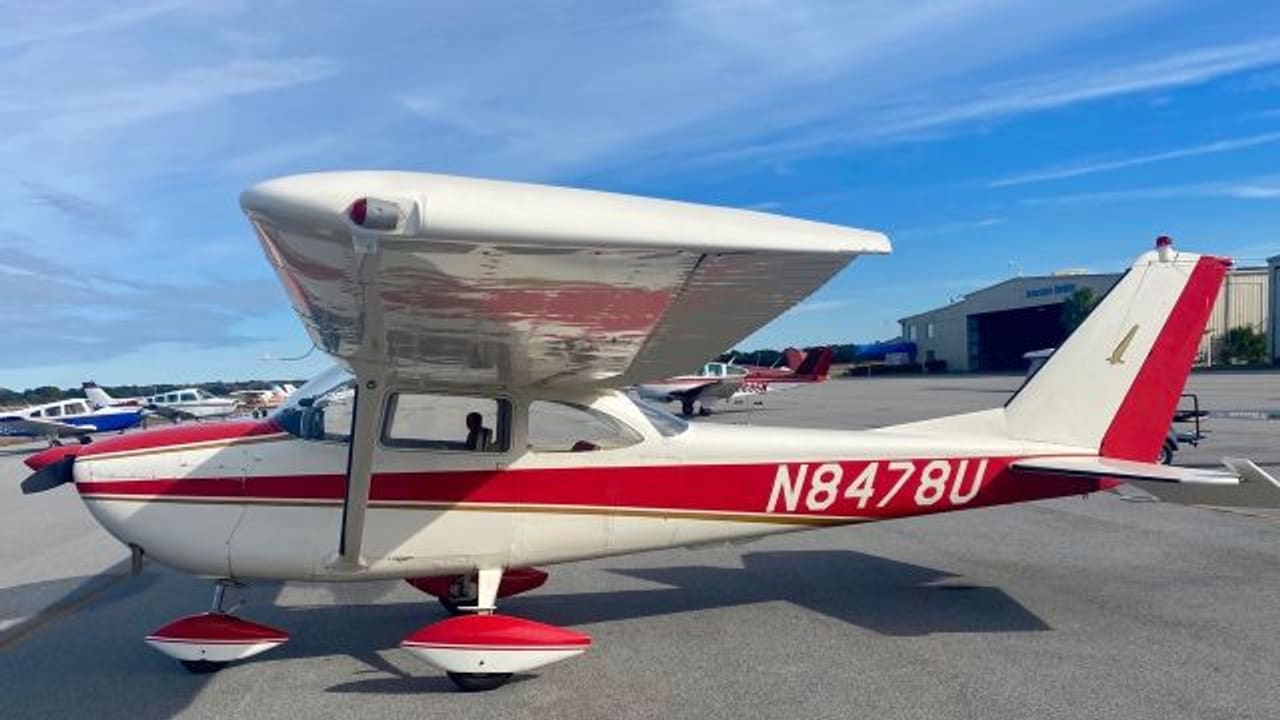
Students commute to Vortex Flight School at KLKU in Louisa, Virginia from across Central Virginia. The reason is uncongested airspace: time spent driving is bought back from time that would otherwise be spent waiting on the ground.
By Vortex Flight School
Vortex students routinely drive past closer airports to get to KLKU in Louisa — roughly 40 minutes from Charlottesville, about 50 from Fredericksburg, and an hour from Richmond. One student commutes from Augusta County, over fifty miles away. The reason is not sentiment. A quiet field gives you back more of the hour you are paying for.
What congestion actually costs you
Your training hour is billed from the moment the engine starts. At a busy field, a meaningful part of it goes on things that are not flying: taxiing to a distant run-up area, holding for a release, sequencing behind traffic in the pattern, waiting for a gap to get back in.
KLKU sits in uncongested Central Virginia airspace out toward Lake Anna. There is no queue to join. On a circuits lesson that is the difference between a handful of landings and a great many — and landings are the thing every student needs repetition of most.
For instrument students the same arithmetic applies to approaches. You come here to shoot them, not to wait in line for one.
The other reason the drive gets made
Five aeroplanes is a lot for a school this size, and it means the aircraft you booked is usually the aircraft you fly. It also means Vortex can offer things that are thin on the ground locally — in particular the Citabria 7KCAB, which carries the tailwheel course and the aerobatic, spin and upset recovery programme.
Tailwheel — conventional gear — is the original landing gear configuration and has been a cornerstone of aviation for over a century. Flying taildraggers demands sharper coordination than a nosewheel aeroplane will ever ask of you, and that coordination transfers straight back into everything else you fly. Plenty of the pilots who make the drive already hold a certificate and are here for exactly that.
Working out whether it is worth it for you
The real test is not the mileage, it is the frequency. Ask yourself how many lessons a month you would realistically fly from your own front door. If the drive means you fly twice a week instead of twice a month, the drive is already paying for itself in hours you will not have to buy twice.
Nearest to you:
- Flight school near Charlottesville
- Flight school near Richmond
- Flight school near Fredericksburg
- Flight school near Mineral & Lake Anna
Or call 540-767-5049 and ask. If the drive does not make sense from where you live, we will say so.